May 30, 2009

Kaputt art!


This morning I went again to Boros' Bunker. The highlight was a man called Wolfgang in our small group of visitors.

As we are leaving a room with some lamps --a piece by Kitty Kraus without tittle-- suddenly we all hear the crash of glass breaking in tiny pieces. Wolfgang is one meter behind me, and he just kicked one of the lamps. He is schocked, as well as all the people in the group. The guide acts as if she has the situation under control, tries to be cool, and chooses the wrong word: "Kein Problem. Wir rufen gleich den Hausmeister an". Hausmeister? To sound more professional (that is exactly what she was trying to do) she should have said Kurator, or something more art-related.

Anyways. For sure that they have an insurance. And I wonder how high is this work rated: 10,000 euros, perhaps? 50,000 euros? No idea, but I can bet that at least 20,000.

In it's plain, kaputt state, I can see that this piece of art is "nothing but" four mirrors, an Osram-light-bulb, and a cable. The materials itself would never cost more than, say, 100 euros. Is the idea 19,900 euros worth?

Artists' work is overrated, and a readjustment is necessary, as it was necessary in the financial sector.


Then we go upstairs and see again broken glass on the floor. "Wolfgang was here", we all think. But no! It is part of a sculpture-installation by Katja Strunz. Kaputt by accident downstairs, kaputt by artist herself upstairs. And this kaputt glass how much would cost? At least a couple of thousand euros...

Beyond the quasi-religious admiration of artist's works, and trying to be just rational, I think this overrating is ridiculous. A readjustment in the system could help to put aside many pretensious people who are making nothing interesting in the field and taking advantage of it.

We, Mexicans, know the sad consequences of that: See how well-paid and spoiled are our soccer players. And compare they performance with our results.

May 23, 2009

Messages from the outside, real world

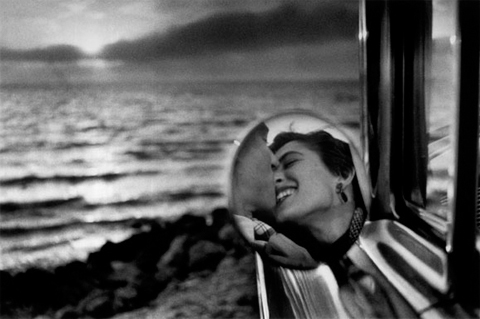
As a boy, I was always puzzled by the warning in the car's mirror: "Objects in mirror are closer than they appear". It was there, as a constant warning about the exterior world. In my childhood I spent thousands of hours in the car: going to school, to some sport matches, on a trip, etc.


Nowadays I happily lack of a car. The mail has replaced it: Gmail is the place where I spent most of the time now, so to say. The actual notice from the outside world is not that threatening, but positive about it, and even cheerful: "No new mail! Want to read updates from your favorite sites? Try Google Reader".


Maybe I should read this novel to understand that mirrors and internet distort reality...


May 22, 2009

Glory & Progress

A little town in the corner where Veracruz and Puebla meet. It is called "La Gloria", "The Glory". An insignifican street joins it with another village at the other side of the political border: "El Progreso", "The Progress".

From Glory we have received the swine flu. But Progress is right there!

Me encanta México.


Größere Kartenansicht

May 20, 2009

Google, Gugl

Menlo Park, California


Jewish Street, Belgrade


Back from Belgrade


At the airport:

Where are you from? Mexico. Uh... Scared face. When you were in Mexico the last time? January. Have you been in touch with Mexicans recently. Not at all. I lied. Sort of. I've been, but none of them has been recently in Mexico. Whatever. Please read this, wait there, and I'll call you again. A guy comes, takes my passport, and leaves. He comes with more flyers, is nice to me, and everybody looks at me a little bit worried.

At Emiljia's place:

Ah, there is a Mexican guy who has an "underground" bar. Quite new. Maybe you'll like to have a look at it. Yes, why not?

At the Tijuana's bar:

Two important roads in downtown make a narrow Y. Right in that urban angle, this Mexican guy, Víctor, has his bar in the first floor. He rented the flat and instead of moving in, he opened the bar. Not a single hint will lead you there. A paper glued to the door is the only sign. We come in, and find 5 or 6 people. Víctor is as nice as negative, pessimistic, depressed. After 30 minutes of conversation, when I am about to suggest to leave, he asks us what we want to drink. I ask for a Coke, we pay "as much as we want", and leave as soon as possible.

Museums night:

First we go to the House of the Students to see a historical survey of Marina Abramović's performances. The exhibition is not an exhibition, but a collection of pictures. The more interesting stuff there is a bunch of people gathered around the spiral staircase attending a theater play-performance on the cellar. I shoot a nice picture. Then we go to the Tesla Museum. The queue is 40 minutes long, so we go. We go to the World Press Photo. There are some pics far more interesting or better than the one which got the best prize, but of course, since USA is the point of attention, a USA-crisis-pic is the favourite for the jury. The collection has been stucked in two rooms, with the lights right behind us, so each time you stand in front of a picture your back starts to burn and a shadow is casted on it. But I enjoy it completely. We also go to the Ethnological Museum, right next to the University's main building and the Student's Park, and see the different dresses of all Balcanic regions. And finally we go to the highlight of the night: the exhibition about punishments for kids in the schools which is hosted by the Pedagogical Museum. I am afraid that the same curator as Abramović's prepared it: just a bunch of pictures taken out from some old German book, with the transcription full of mistakes. My Serbian is still not good enough as to understand it properly, and the cyrillic letters make me feel dizzy... So the best thing to do now, after bumping in Loki for a dinner, is go to the Supermarket.


At the Supermarket:

This is the only concept-store of the city. Trendy, fashion, avantgard, cool, you have to be there if you want to be considered as a (cool) person, since Serbians think a lot about what other people think about you... Exhausting as it can be in Mexico as well. We missed the concert of the Swiss jazz band, but for good. Swiss jazz band? Sounds as an metaphysical impossibility. The Swiss guys are very bored, wearing boring clothes, they are at a table next to ours sipping their beers. Another jazz band is playing very loudly, and the police came because one of the neighbors complained. Nobody cares, not even the police.

The moral of the story is:

Belgrade is not the best place to meet neither Mexicans nor Swiss. Here, the people are really thirsty of culture and art, and they want to use them as an excuse to socialize. Unfortunately, the technical know-how is still missing, and the budget is small.


May 16, 2009

In Tito's country

Just went two days ago to an exhibition in Belgrade called "We all are Tito". The best "Communist experience" I have ever had. The building itself is a masterwork of Communist architecture, now completely creepy and abandoned. We approach the main entrance and see a couple of persons wasting their time in front of an old TV. As we pay and enter, we meet just 4 tourists, but around 10 people working: some guards, cleaners, ticket sellers... the typical burocracy of the communist society. And of course they give us the impression that they have been working there for more than 20 years.

The exhibition is completely scary for me: a collection of 200,000 presents which Tito got for his birthdays (25th of May, officially, but the real one was May 7th). People ran all around the country with a torch, as if it were the Olympic Games, and deliver him a final torch. He got 40, as many years he was in power. People were making such a big effort to give him nice presents, always related to their own work or profession.

People had to write him letters while being in th school, and they all got into the "Tito pioneers", sort of a scouts club (see "Good bye, Lenin"). And if families were large, Tito would even be the godfather of one of the youngest kids.

Such a big presence of a President in everyday's life of citizens is really scary.


May 9, 2009

Two examples: "international", "classical"

Photo: Eliot Erwitt


Talking to AD, I realize how "international" we (T & me) are. The last months we have met each time in 5 different countries: Germany, Croatia, USA, Mexico and Italy. And counting, since we will meet next week again in Belgrade. Awesome!

For couples having a Skype-relationship like us, airports have turned to be our "third place", despite Starbucks / You've got mail!.

* * *

1999, Mexico City. I am about to meet JE, but since I came in advance to our meeting point, I take out my PDA and start reading the Metaphysics of Aristotle because I've been working on some project. And then I realize what being a "classical author" is. Tell Aristotle that 2300 years later, somebody would be reading his notes... a. in a still unknown continent; b. translated to a still non-existent language; c. on an unimaginable electronic device; d. by a guy of a unknown race... Sounds as if in year 4300 somebody would be reading a book in an unknown galaxy, etc... Gosh!


May 5, 2009

Firefox, Voltaren


Champú de sábila

Me encontré este video que hice en el mercado de Oaxaca unos días antes de la navidad de 2007.


May 3, 2009

Andreas Feininger: Life & Death in NY

Coney Island, July 4th (1949)


Masses of tombstones in cemetery in Queens (1948)


"Shock Doctrine", by Naomi Klein


May 2, 2009

Oportunismo de la ignorancia

Mientras todo se agobian por la escandalosa influenza...

... México recibe préstamos por casi 50mil millones de dólares, el mayor préstamos jamás dado a un país por el Fondo Monetario Internacional...


... y se aprueba la estúpida Ley del Narcomenudeo a la que me opongo totalmente...

... y M me cuenta que se mudó de casa, que ahora vive en edificio donde pasara sus últimos días Max Weber, víctima de la Fiebre Española, y los supersticiosos están temerosos de que esa mexicana se haya instalado ahí...

... y leo que Sigmund Freud perdió a una hija en esa epidemia, y que Egon Schiele, Edmond Rostand y Guillaume Apollinaire también se murieron por eso...

... y aunque ya me dio gripa a mí también descreo de todos los aspavientos mediáticos, y prefiero hacer cosas más interesantes como leer algo sobre los Balcanes o escribir sobre los mexicas, y disfrutar tranquilamente mi sopa de pollo con verduras...

... porque en realidad lo único que hay detrás de ese virus, que es real, ¡faltaba más!, es un gran y molesto oportunismo económico, político, farmacéutico, amarillista, un oportunismo de la ignorancia...

... y le falta eso que don Alfonso Reyes llamaba "una pura emoción intelectual".


Ecstasy: Bernini, ¡Álvarez Bravo!, Dalí


April 30, 2009

"El doctor", de Enrique Cisneros

Jué en un rancho de la sierra, allá en la revolución
cuando quedaban los muertos pudriéndose bajo el sol.
Nos llegó la peste un día, quen sabe de’onde llegó,
Que'ra la fiebre española, la gente ansí la llamó.

Y que se muere don Chon, don Chon el enterrador.
Lo vino a ver don Zenaido, que del rancho era el doitor.
Le puso un espejo, y luego que ‘l muerto no resolló
Y que me gritan Canuto, tú y tu compadre Nabor
Entierren ese dijunto, entre más hondo mejor.

Lo líamos en un petate porque ya no había cajón.
Hicimos un joyo grande y allí echamos a don Chon.
Y que se oye muy abajo: "No me entierren por favor.
¡Estoy vivo...! ¡Estoy vivo! No sean ingratos por Dios".

Y me dice mi compadre: "No li’aga caso a esa voz;
échele tierra compadre, ese ya se petatió;
Dijo el dotor que’sta muerto y él, pos pa’ eso estudió,
¡A poco el muerto tarugo va a saber más que’l dotor!"


April 27, 2009

Scream: Munch, Tamayo


Munch: "I was walking along a path with two friends—the sun was setting—suddenly the sky turned blood red—I paused, feeling exhausted, and leaned on the fence—there was blood and tongues of fire above the blue-black fjord and the city—my friends walked on, and I stood there trembling with anxiety—and I sensed an infinite scream passing through nature".

Tamayo's "Grito" reminded me of our lotería's "Diablito".


April 26, 2009

Sexy trees


The one on the left was found somewhere in the web, somewhere in the world... The one on the right is between my flat and the closest square.


April 18, 2009

En el hoyo: Malcolm Lowry, Nick Hornby


Hay una expresión en México que se ha popularizado los últimos años: "en el hoyo", que se utiliza cuando alguien ha cometido un yerro y se siente abatido.

Desconozco el origen de la expresión, pero recuerdo uno de sus antecedentes: "mear fuera del hoyo". Si ésa es la fuente, sufrió una transformación de 180º: de estar (meando) fuera del hoyo, se pasó a estar en el hoy.

Hay dos razones que intentan explicar la expresión:

1. Un hoyo está a un nivel más bajo del estándar, del "nivel calle".
2. Un hoyo es normalmente un lugar oscuro.

Supongo que la segunda razón no es válida, pues más valdría decir "estoy en el fondo de una cueva", o algo similar. En un mal día, Malcolm Lowry le confió a su diario: "No creo que pueda seguir. Me hallo en un lugar oscuro. Perdido".

Sólo la claridad de la luz salva de lo oscuro. Y esa claridad no sólo se encuentra arriba, como cuando se está en un hoyo, sino también enfrente (o atrás, o incluso abajo), como cuando se está en una cueva.

En ocasiones, la idea de "estar en el hoyo" se refuerza con "y aún cavando". Ahí parece descubrirse ya la clave de la expresión: no se refiere tanto a la oscuridad sino al desnivel físico, geográfico. Cuanto más se cave, más profundo se está, y más difícil es salir. Quien está en el hoyo debería salir, para estar al mismo nivel de los demás, pero a veces no se consigue, sino que, tristemente, se cava más.

No estoy seguro de que la expresión sea mexicana (¿de Monterrey, originalmente?), pero me sorprendió encontrarla en Slam, de Nick Hornby:

"My dad used to say that if you were in a hole you should stop digging. It was one of his favourite expressions. It meant that if you were in a mess, you shouldn't make it any worse. He was always saying it to himself: 'If you're in a hole, Dave, stop digging'. I stop digging".

Desconozco si la expresión se utiliza en Inglaterra, pero hasta ahora la había encontrado exclusivamente en México. El hecho de que Hornby deba explicarle el significado al lector me hace pensar que no se frecuenta en la Isla. ¿La habrá "inventado" Hornby? ¿La habrá escuchado de algún mexicano? (Igual tiene por ahí alguna connotación sexual y/o golfística que se me escapa...) ¿Habrá visto la peli de Juan Carlos Rulfo, y le habrán explicado el sentido de la frase?


Eggleston, Borges

There is a magnificent phrase in Borges' poem "Llaneza", which Pereda draws attention to in his new book: "dialecto de alusiones" -- something like "dialect of allusions" or "dialect of references", "of mentions".

Here is the poem:

Se abre la verja del jardín
con la docilidad de la página
que una frecuente devoción interroga
y adentro las miradas
no precisan fijarse en los objetos
que ya están cabalmente en la memoria.
Conozco las costumbres y las almas
y ese dialecto de alusiones
que toda agrupación humana va urdiendo.
No necesito hablar ni mentir privilegios;
bien me conocen quienes aquí me rodean,
bien saben mis congojas y mi flaqueza.
Eso es alcanzar lo más alto,
lo que tal vez nos dará el Cielo:
no admiraciones ni victorias
sino sencillamente ser admitidos
como parte de una Realidad innegable,
como las piedras y los árboles.

With the expression, Borges refers to all those associations we do, on purpose or not, when we have a concept. Say, for instance, "Kaliningrad": amber, Baltic Sea, Kant, Rusia, Königsberg, etc.


When I read the expression "dialecto de alusiones" I think of William Eggleston and his unique use of color in photography. He is a master in the composition of colors, and every single shine or hue of the redish pattern fits exactly with the cold shades. Personally, I feel more confortable with black and white photography, perhaps because I am more interested in elder photographers, who used it mostly, and also because I always look for something behind the image itself (a gesture, a story, a soul). But Eggleston's colors are, as Borges put it, a "dialecto de alusiones" which can teach us always something worth about the world we live in.


April 17, 2009

"Entre tú y yo jamás ha habido...", de Fabio Morábito

Entre tú y yo jamás ha habido
un círculo, aunque sea tenue, de plata
o de oro, una mínima
presión en uno de tus dedos
que le recuerde a tu circulación
que existo. Hay quienes no conciben
que dos se quieran sin un anillo de por medio.
Confían que no perdura amor

si no lo alumbra un aro.
Los tuyos, con sus historias turbias, me intimidan.
¿Dónde cabría mi anillo en una mano tan completa?
¿Qué añadiría su brillo a tanto imperio?
Mejor dejarte con tus sortijas
entre las cuales
la mía sería una intrusa
y si alguien cree que apenas nos queremos
al ver que nada mío amordaza tus huidas,
que falta el lazo que declare nuestro vínculo,
la argolla que sujeta el barco
y nuestras manos siguen vírgenes, casi ajenas,
mostrémosle, en vez de anillos, las heridas
que desde hace tanto nos hicimos,
las cicatrices que no brillan
porque su resplandor es de otra índole. ~

Fuente: Letras Libres, abril 2009.
Foto: La dama de los anillos de Herculano.


April 15, 2009

Earlobes

For me, one of the most important characteristics of a human face (or head) is --yes, quite strange-- the earlobe. Ears without a lobule look a little bit strange for me, not really beautiful, as if something were missing.

An earlobe looks like a drop of water which got frozen before falling down, a flesh-stalactite which gives dynamism not only to the face and smile, but which is also responsible of avoiding a too simple interaction between the ear and the temple. A sexy corner.

These reasons make me prefer earlobes which haven't been tortured by a simple earring-hole, or a more dramatic piercing, or a completely bizarre stretching. A clip-earring is enough to make it look better.

Till now I have found a single exception: Vanessa Paradis' lobeless ears...


April 13, 2009

Pedro Páramo, ese libertario liberal


El Tilcuate siguió viniendo:
- Ahora somos carrancistas.
- Está bien.
- Andamos con mi general Obregón.
- Está bien.
- Allá se ha hecho la paz. Estamos sueltos.
- Espera. No desarmes a tu gente. Esto no puede durar mucho.
- Se ha levantado en armas el padre Rentería. ¿Nos vamos con él, o contra él?
- Eso ni se discute. Ponte al lado del gobierno.
- Pero si somos irregulares. Nos consideran rebeldes.
- Entonces vete a descansar.
- ¿Con el vuelo que llevo?
- Haz lo que quieras, entonces.
- Me iré a reforzar al padrecito. Me gusta cómo gritan. Además lleva uno ganada la salvación.
- Haz lo que quieras.
Visitors