June 30, 2009

Women who read are dangerous!


There is this book by Stefan Bollman translated to many languages. I have been about to buy it a couple of times, but at the end I have decided otherwise.

These days Berlin is covered by a picture of Marilyn Monroe reading James Joyce's "Ulysses". A perfect illustration for these summer days, which apparently arrived already.


Megan Fox has not only a tattooed Marilyn Monroe, but also a Shakespeare quote on the back of her right shoulder: "We will all laugh at gilded butterflies" (and even a cheesy quote on her left ribcage).


The picture reminded me of "Atonement", a fabulous novel by Ian McEwan, which is more about a girl who writes. Anyway, when I watched the film, there is that scene in the library. All Germans were very serious in the cinema - just someone was laughing at it. (Keira looks by the way quite similar to the woman on the cover of the book above.)


The Labyrinth is a film about a girl who indeed reads a lot of science fiction played by teenager Jennifer Connelly.


And of course the opposite: My Fair Lady, the story of an illiterate, charming girl... Audrey!


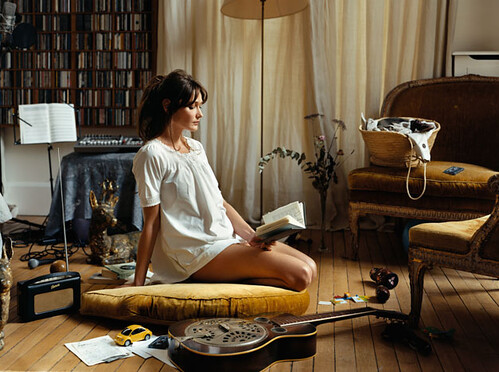
Encore: Carla Bruni also reads sometimes, apparently kneeing...


June 28, 2009

Berlin, Berlin - wir fahren nach Berlin

A nice promo-video about Berlin by "Bread & Butter"! Three minutes long...


June 26, 2009

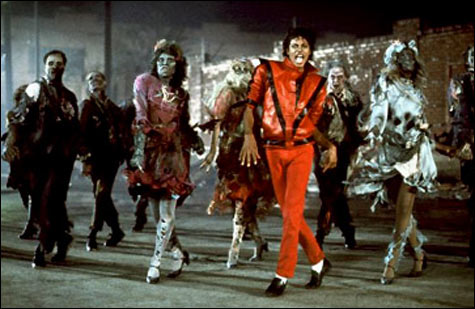
Michael Jackson: Some memories


I was five and MTV just three years old when I went to RQ's place. We were talking about the moon, since he was dreaming about becoming an astronaut (some months later he gave me the only book on astronauts I have ever read), when he suddenly said: "Oh, you have to watch this", and he turned on the TV, tuned MTV, and we watched Thriller. That's how I remember the moment, but most probably he had the video recorded on his Beta-VCR. That was my first approach to MTV and the "visualization of music", since till then I had never watched a music video.

A couple of years later, the guy living in the front house invited me to his place, and we watched some music videos on MTV. That was my second approach to the channel, since at home we lacked of cable and the ubiquitous parabolic antenna of the 80's. I can hardly remember what we watched, but I suppose it was Michael Jackson again and Guns 'n Roses. I never went again to his place.

Living in Monterrey the white sock was a must even in the 90s. The first time when I wore a suit I was 6 years old, and the second time I was 15. With white socks both times, of course.

My "childhood memories" related to Michael Jackson ended in 1993, when I went to Colorado. LR had a tape for the summer trip with "Black or White" and "Heal the World", which he listened to obsessively. Up to now I cannot stand the "betterment for all"-song anymore, completely sick of it.

At that time Michael Jackson was disappearing from my horizon for good. Michael Jordan had been much more important the last years, and specially that summer, when we read in some kiosk in the Rocky Mountains that his father had been kidnapped. Air Jordan's flights showed to be much more appealing that Michael Jackson's nose, bleached skin, Neverland mansion, and other bizarre stories.


June 23, 2009

Acta de nacimiento del Paricutín


[Transcripción del acta de nacimiento del Paricutín, uno de los documentos más fascinantes del pueblo mexicano.]


Arriba, un sello testifica: Ayuntamiento de Parangaricutiro, Mich.


En la Villa de Parangaricutiro, Cabecera del Municipio del mismo nombre, Estado de Michoacán de Ocampo, siendo las 10 diez horas del día 21 reunidos en el Salón de Actos del H. Ayuntamiento, previo citatorio urgente, los CC: Regidores Felipe Cuara Amezcua, Presidente Municipal, Félix Anducho Síndico, Rafael Ortiz Enríquez, Ambrosio Soto y Rutilio Sandoval, así como los CC. Agustín Sánchez, Jefe de la Tenencia de Parícutin, de este municipio, y Dionisio Pulido, vecino de dicho lugar; el C. Regidor Felipe Cuara Amezcua, Presidente, declara abierta la Sesión, manifestando que el día de ayer como a las 18 horas se presentaron los CC. Sánchez y Pulido informándole, completamente excitados, de la aparición de una fogata que ellos no sabían qué era, y que había resultado como a las 17 horas de ayer en la Joya denominada Cuitzyutziro, al oriente del poblado de Parícutin por lo que, desde luego, pedían se trasladara al lugar de los hechos, para que por su vista diera fé de su aseveración; a la vez Dionisio Pulido, propietario del terreno arriba mencionado, hizo del conocimiento que el día de los acontecimientos, temprano, salió de su poblado (Parícutin) a cuidar sus borregas en compañía de su esposa Paula Rangel de Pulido y a visitar sus propiedades situadas en la repetida Joya; que por la tarde, a hora temprana tuvo que alejarse del lugar, recomendando a su esposa cuidara de las borregas hasta que él regresara; que como a las 16 horas volvió al lugar precitado y recomendó a Demetrio Torres, que trabajaba en los terrenos, desunciera los bueyes y los llevara a beber agua; en seguida llegó hasta donde estaba su mujer a quien también recomendó volver al pueblo, encaminándose después de revisar los trabajos efectuados en sus terrenos, hasta llegar a la falda del cerro oriental circunvecino; que allí como a las 17 horas, sintió un fuerte temblor y estruendos en la tierra a lo que no hizo mucho caso ya que con frecuencia se estaban efectuando cismos [sic] desde hacía más de ocho días, pero siguió escuchando fuertes ruidos subterráneos acompañados de temblores y que entonces todo aterrado volvió la vista al Poniente o sea a su pueblo, observando con sorpresa que allá abajo en la Joyita se levantaban largas lenguas de fuego, con fuertes humaredas y estruendos nunca oídos, por lo que presa del pánico más terrible, huyó rumbo a Parícutin, a donde llegó jadeante dando inmediatamente cuenta al C. Agustín Sánchez Jefe de la Tenencia de lo ocurrido. Que el señor Sánchez al convencerse de la veracidad de lo denunciado por Pulido, se trasladó juntamente con él a la Presidencia Municipal de Parangaricutiro, donde todos alarmados dieron parte de los hechos al C. Felipe Cuara Amezcua, quien con la premura que el caso ameritaba pasó en compañía de los denunciantes al lugar donde había aparecido el fenómeno que posteriormente se dieron cuenta era un volcán.

Acto continuo -dice el acta- a propuesta de algunos vecinos de este lugar y de Parícutin, se discutió el nombre correcto que deberá llevar el mencionado Volcán, y después de amplias deliberaciones y deseos de los pobladores de la región, por unanimidad se le denominó VOLCÁN DE PARÍCUTIN.

[El acta indica también la necesidad de estudiar todo lo relativo a los problemas que el nuevo volcán había hecho surgir, y la conveniencia de poner en conocimiento del Presidente de la República, del Gobernador del Estado, de la Secretaría de Agricultura, etc., tan extraordinario fenómeno, y se procedió inmediatamente a bautizar al neonato.]

El acta está firmada por el Presidente Municipal Felipe Cuara Amezcua, Rafael Ortíz, Rutilo Sandoval y Félix Anducho.

Ubicación: Zanja abierta entre las parcelas de cuatro propietarios.

Terreno: Llano de Quitzocho, tenencia del pueblo de Parícutin, municipalidad de Parangaricutiro, Michoacán (Este llano tenía una altura media de 2280 metros sobre el nivel del mar).
 
Coordenadas geográficas: 19º 19' L.N. | 102º 19' L.W.


Foto arriba: Dionisio Pulido (centro) y Celedonio Gutiérrez (derecha).
Foto abajo: Dionisio Pulido (de pie) y Ezequiel Ordóñez (sentado).


Paricutín (1943), Capelinhos (1957)


The similarities between volcanoes Paricutín and Capelinhos are unbelievable. Both appeared out of the sudden, either on a corn field owned by hero Dionisio Pulido or in the Atlantic Ocean close to Faial (Azores Islands). Scientist tracked every day the evolution of the new volcano, and nobody died when they erupted. Buildings nearby were covered except for the towers of the church and lighthouse.

Paricutín is an impressive place since you have to take a donkey or a horse in order to get to the church through the forest of big lava stones (at least it was so in the 80's, when I went there). To go to Capelinhos, this time we took a jeep and drove it through the rough roads of Faial. The new volcano melted with the island, and add to it 2.5 square kilometers of surface. There are no strange lave rocks to see, but three hills of smooth ashes and an amazing view of the borderless ocean.


Volcanoes are the best proof that the Earth is somehow alive...


June 18, 2009

Islas

Estoy alucinado en las Islas Azores (hoy en Saõ Miguel), y me avisan de "Letras Libres" que publicaron en el Blog de la redacción un texto cortazariano sobre otra isla. Muitas saudades!


June 15, 2009

Volcanic energy

Pacaya


One and a half meters is the closest I have ever been from lava, on Guatemala's Pacaya. The heath is so strong, that I couldn't stand any closer or longer. The sneaker's sole of Mom melted, while I was wondering with Dad the possibility of taking advantage of such an enormous amount of energy (extremely interesting are also the anaconda model and pelamis project).

The day after tomorrow I am landing on the Azores Islands. It is not rare that sometimes new islands emerge because of volcanic activity. That happen once, and --of course!-- English flags were risen immediately. Ironically, the new island disappear as fast as it had emerged.

Volcanic energy evaporating water in the Azores: "Sea water instantly turns to super-heated steam as it seeps into the active submarine volcano known as Ilha Nova, or "new island." Months after the volcano first erupted on September 27, 1957, torrential rains from the condensing steam continued to torment the villagers living near the new volcano" (taken from National Geographic).


June 14, 2009

"Home"

Some comments concerning Yann Arthus-Bertrand's documentary film Home.

1. The quality of the photography is superb, as superb has been his work. I couldn't see any shadow or reflection of any plane or helicopter in any shoot.

2. The online-version is roughly divided in three parts: 20 minutes of praising the beauty of our planet and explaining its development, 1 hour of terrible problems due to us abusing the Earth, 10 minutes of positive efforts done today.

3. The first part is really interesting and is well connected to the last one: If organisms (plants) manage to live using solar energy, how come we have depended on non renewable energies? We should start developing solutions because -connection to the main part- we are destroying the planet.

4. But the main part is too long and too negative. To make a comparison, it is as long as Jesus' torture on Mel Gibson's film (Passion of the Christ): one gets the point, but they keep going and going, and you just want it to end because you are already feeling sick. Some dose of greenwash...

5. Two ironic elements concerning Home's making-of. First, unimaginable quantities of fuel were used to fly all around the world to shoot it (ok, he is aware of that and started Action Carbone, at least). Second, they criticize that 2% of the richest people control 80% of the resources, while the sponsor was PPR, the luxury company.

All in all, it is worth to watch it not only because of the beautiful images, but first of all because the challenge of thinking in "a green" way appeals and concerns to all of us.


June 13, 2009

Woman waiting with two hats


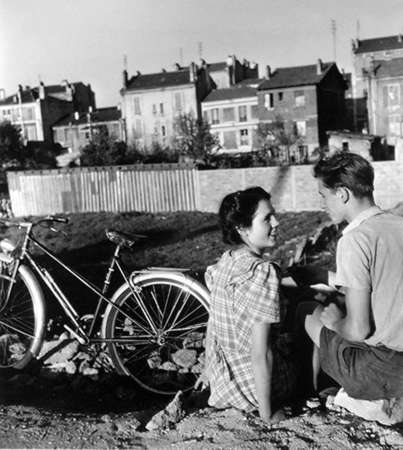
Last year I shot this pic of a woman in (Buda)Pest. Today I remembered it immediately when I saw, by chance, this photo by Robert Doisneau (couldn't find the name and date).


On bikes and girls

(To be read with this music.)

I have a beautiful retro-bike. Designed for girls. From which advantages I profit. I call it my Taxi-Fahrrad, because it has the same color of the taxis in Germany. That was the decisive reason to buy it. Since it is a designer-bike, you cannot buy it anymore, and two years ago it was available just in that concept store. I take it that they sold just a bunch of bikes like mine, perhaps two or three, since I never saw a similar one in the concept-store again. But one sunny day I discovered my bike's twin, chained at the entrance of Nordbahnhof. I would have liked to get in touch with the girl who drives it daily, and everytime when I go to that train station -like last Thursday- I fancy to meet her. But I haven't seen her again.


Talking about girls and bikes, let's Momo Kapor tells us something. In a stupid way, I cut the text off a magazine without the page with a very sexy drawing by him and without the tittle of the following text, but I am almost sure that it comes from his "Guide to the Serbian Mentality".

???
by Momo Kapor

If I die tomorrow, I would regret only one thing - a bike! By the time I earned enough money to buy a solid bike, my buddies had already bought cars and so, you see, they had never actually bought bikes. Whenever I wanted to feed my eyes on these tamed wiry beasts, I would go to the city of Subotica - in front of Town Hall there are dozens of rows of bikes from my youth. Dusy "Triumps", worn-out Italian "Adrilas" and repaired "Biancis", dull and robust German "Wanderers", reliable "Durkops", solid English "Torpedoes", and the darling of Vojvodina's plane and dusty roads, the "Partizan" - they are all grouped there waiting for their owners to finish talking about the harvest and the price of corn, or to have a drop at the "Bela Lajda" for a glass of beer... And just as today people praise their cars, bicyclists once used to tap the gouvernail and testify to their bikes' "excellent transmission"! Today, seducers walk along the street clinking the keys of their sport cars. A genuine seducer differed from other males because the right cuff of his trousers was pegged! This meant that his bike was parked in front of a bar!

For those born in the post-bike era, I must explain that a peg protected the trouser leg from being chewed by the cog and chain. Pegs belonged mostly to that common kind, the wooden clothes-pegs you see on clotheslines, but there were also metal ones that used to prevent tablecloths in taverns from being carried away by the wind. It was quite elegant to have such metal peg!

The best description of a solid bike in the history of literature comes from Italian writer Giovannino Guarschi, in his book Don Camillo, in wich he speaks about bikes circling in the streets of his native Bassa:

"A true bike must weigh at least 30 kilograms. The paint should be peeled of so that only traces remain. A true bike, first and foremost, should have only one pedal. All that remains of the other is its shaft that marvelously shines from being polished by the soles of shoes - it is the only part of the whole vehicle that shines. The rudder, not coated with rubber, of course, should not stand vertically toward the wheel but at least twelve degrees leftwards or rightwards..."

My dear patient reader, in this description you have recognised your old uncle's bike without a read mudguard, on which you learnt to ride at the cost of many bumps, with your left leg protruding under the bar because you were to small to ride sitting on the seat! This is that bike you haven't ridden enough! And when we began looking at girls on bikes and their pink buttocks that would lighten by turns from under the skirt, it was considered rather witty to tease them while standing aside:

- Hey babe, your rear wheel is turning!

Gosh, what we did just to attract attention: we would ride a bike backwards, with one hand, with no hands, with legs resting on the rudder circling around girls resisting gravitation, risking all and disgrace! And when a girl would finally agree to sit on the bar in front of you and have a ride, there was always a fool who would call out:

- Say, is that a woman's bike?

A true bike should definitely have patched tires so as to clatter better: a wiry basket for a baby, a dynamo-engine driven by the front wheel and a headlight that, as a rule, never works, and above the rear wheel - a luggage grid!

A true bike should be a "contra". On such a bike people would go on a journey, love, transport hey and transport sacks of flour to the steam-mill. On such a bike a family would ride to pay visits: a child in front, a wife behind and the father in the middle.

And just when we thought that bikes were gone for good, they reappered in our lives. In Belgrade, Ljubiša Jocić, a surrealist who was the only person to ride a bike through the city's streets, was considered crazy.

But soon a flood of bicyclists jammed all the walkways and these were mostly ridden by a husband and wife who hoped that she could get rid of surplus kilos by turning pedals. Usually they are both in similar jerseys and have similar body volume that, to get rid of, would require a ride around Europe at least.

No, no, neither bikes nor girls are as they used to be! Both bikes and girls can be play today splendidly disassembled and packed into a car! Really!

Foto: "Le vélo du printemps" (1948) by R. Doisneau

June 11, 2009

Mark Twain dixit


"Travel is fatal to prejudice, bigotry, and narrow-mindedness, and many of our people need it sorely on these accounts. Broad, wholesome, charitable views of men and things cannot be acquired by vegetating in one little corner of the earth all one's lifetime".

Foto: Mark Twain in Nikola Tesla's lab.


June 7, 2009

Drown: Guggenheim, Biennale


I made this pic of Maurizio Cattelan's Pinocchio in Guggenheim last November.
This weekend, Elmgreen & Dragset inaugurated their Nordic pavillon with this very original work.


June 4, 2009

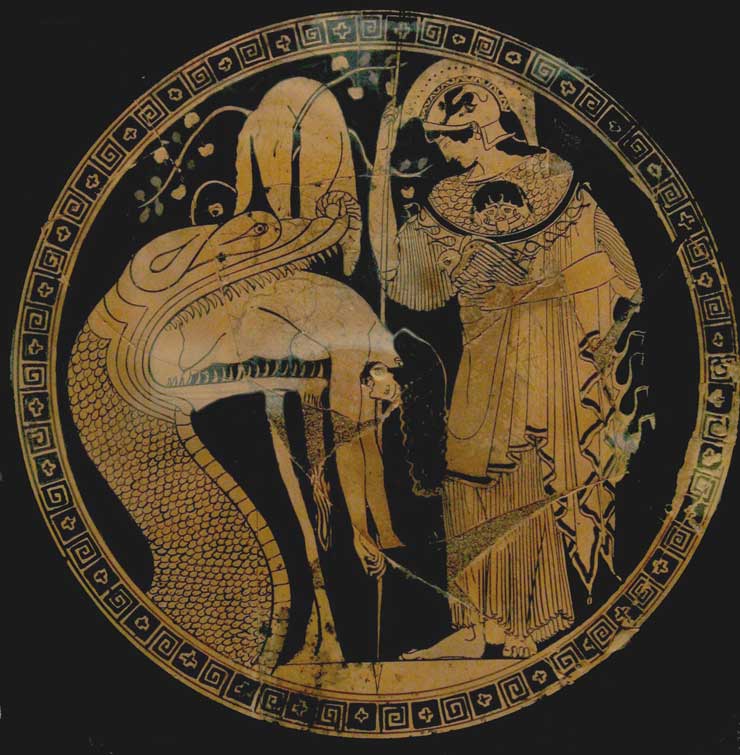
Atena, El Tri (1994)


Up: Jason and the dragon who keeps the Golden Fleece, and Athena.
Found in Cerveteri (Etruria). 480-470 b.C. Keep in Vatican Museum.

Below: The Aba-Sport jersey of the Mexican National Soccer Team in World Cup 1998.
The best jersey ever! Design based on the Calendario Azteca.


June 2, 2009

My first FAZ-publication!

Recently, I started working for the Frankfurter Allgemeine Sonntagszeitung. Last week I wrote a short review of a book, and yesterday it was my real début in this weekly newspaper.

Since I haven't been in Mexico the last months, I decided to get in touch with Guillermo Sheridan, who let me quote him in this text about the swine flu. So, there you go: "Notizen aus einem verschnupften Land".


June 1, 2009

Cortázar será Kortasar y Borges es Borhes

Un vistazo a la literatura castellana disponible en Belgrado, a propósito de mi reciente viaje a Serbia. Publicado originalmente en el "Blog de la redacción" de Letras Libres esta tarde.

Tan pronto como aterrizo en Belgrado, comienzo a pasar revista a los autores hispanoamericanos disponibles en traducción. La situación de las librerías vale ya una mención particular. Se concentran en el centro de la ciudad, como si sitiaran los edificios de la universidad. Por ahí se deja descubrir a modo de incipiente occidentalización una librería inglesa, pero, en realidad, todas son locales, con una reducida oferta en lenguas extranjeras: “Mamut” –por un esqueleto elefántido descubierto ahí abajo–, “Prosveta” –la legendaria librería-editorial de Geca Kon–, “Dereta”, “Narodna Knjiga”... Me parece un trabajo mayor esto de traducir(lo todo) a un idioma con una población total de 13 millones.

Mi primera librería se llama “Plato” (“Плато”). Una sucursal está en la calle Knez Mihailo, la otra adosada a la Facultad de Filosofía, a tres pasos del Instituto Cervantes. Sin supersticiones ni aspavientos encuentro significativo que la calle más entrañable de la ciudad esté encabezada por la Biblioteca Nacional y flanqueada por librerías, la Facultad de Artes, alguna galería, institutos culturales de España, Francia, Inglaterra, Alemania, además de las típicas kafanas, esos cafés modestos a donde concurren las cartas y la conversación.

De entrada, García Márquez, por mucho el autor más vendido, me cuentan. Alegra ver entre los estantes a Cortázar y Borges. En serbocroata se transcriben los nombres siguiendo la regla estricta de la fonética: “escribir tal como se oye”. Así, Cortázar será Kortasar y Borges es Borhes. De pronto salta a la vista con el furor de la fosforescencia “El búfalo de la noche”. Por ahí aparece también algo del salvadoreño Horacio Castellanos Moya y algo del cubano Pedro Juan Gutiérrez. No hay mucho más para escoger

En la otra filial pregunto por Octavio Paz. Hace años se agotó y no se ha reeditado, pero ¡qué bueno es! –dicen con entusiasmo–, claro que lo conocemos. ¿Qué autores nos sugerirías agregar a nuestro catálogo? Podríamos hablar con los traductores y arreglar algo. Una antología de cuentos latinoamericanos me distrae antes de que pueda garabatearles algunos nombres. En el índice de Otkačene priče (algo así como Historias insólitas, 2008) aparecen Juan José Arreola, Jorge Volpi y David Toscana entre los compatriotas, además de Augusto Monterroso, Edmundo Paz Soldán, Alberto Fuguet, Osvaldo Soriano, y otros. Como portada, una foto de la renombrada Goranka Matić: un coche color panterarrosa en lo que parece un malecón cubano. Los compiladores-traductores son un matrimonio radicado en Buenos Aires, Branko Anđić y Ljiljana Popović-Anđić. Me ayudan a traducir el prólogo: Europa está muy atareada en su quehacer revisionista del siglo veinte, y sólo de otros lados –dígase India, América, África– sí llegan bocanadas frescas de aire. De ahí la necesidad de traducir estos cuentos agrupados temáticamente: cuentos de dinosaurios y cuentos de nietos. Curiosa distribución.

La del sábado es la Noche de los Museos. Todo el mundo a la calle. Horas de pachanga que coinciden con el festival de jazz e improvisación Ring Ring. Entre otras, me interesa la exposición World Press Photo, que este año premia un proyecto de Carlos Cazalis. Llego al DOB (Dom Omladine Beograda: Centro Juvenil de Belgrado) para ver las fotos, pero antes de tomar la escalera me distrae una librería pequeñita, bien conocida por albergar editoriales independientes. Felizmente no faltan entre los estantes Ramón Gómez de la Serna ni Vargas Llosa.

Mi joya de la noche, sin embargo, son las obras completas de Juan Rulfo editadas en 2006 por Gradac, una de las editoriales –además de Nolit– que más se ha preocupado por traducir buenos libros. Su catálogo enlista también a José Ortega y Gasset, María Zambrano, Dalí y a Ernesto Sabato, por ejemplo. Es un librito blanco, alargado, con letras negras: Huan Rulfo y luego con letras color turquesa: Sabrana dela y el desglose más abajo: Pedro Paramo / Dolina u plamenu. Para la publicación se trabajó al alimón con la Fundación Radoje Tatić. El nombre de Tatić importa, pues aparentemente fue uno de los primeros en interesarse por nuestras literaturas y quien llevara a los Balcanes en épocas tempranas a autores de lengua castellana. Tradujo a Paz (El arco y la lira), a Asturias, a Neruda, a Borges, a Cortázar... Buen conocedor de Rulfo, supo entenderlo, aquilatarlo, y también lo tradujo ya en 1966. Todo Rulfo por 594 dinares, unos 110 pesos.

Las dependientas me cuentan también de la editorial Clio, que por ser grande no está representada ahí para privilegiar a los editores independientes. Revisando más tarde su catálogo, veo los Diarios de Frida Kahlo, La agonía del cristianismo de Unamuno, Doña Perfecta, Entre naranjos de Vicente Blasco Ibáñez, La busca de Pío Baroja, las Cartas de Bécquer, y poco más. Éste es, en suma, el panorama que se les ofrece a los belgradenses.

¿Y qué me recomiendan de por acá?, les pregunto. Está Ivo Andrić, por supuesto, el único Nobel yugoslavo. Ya conocía El puente sobre el Drina, y una amiga me regala ahora una colección de cuentos suyos. Me hablan de Danilo Kiš, autor ya conocido en nuestras latitudes. ¿Y qué más hay? Entre los contemporáneos figuran: el famoso poeta Vasko Popa –el editor de Nolit que publicó a Rulfo hace más de 40 años con poca aceptación del público–, Borislav Pekić, David Albahari, Goran Petrović, la imprescindible –para entender Belgrado– Svetlana Velmar-Janković y el montenegrino Mihailo Lalić.

De regreso, en el avión yugoslavo de JAT leo un texto sin desperdicio alguno del gran Momo Kapor. Lastimosamente se le nubló el juicio y se puso a defender a Milošević y otros criminales de guerra. En Belgrado pesa –¡uf!– el pasado tan reciente, aún presente. Para aligerarse de vez en vez, nada como emprender la fuga a un malecón tropical generoso en viento fresco para leer a Borhes y Kortasar.

"La ballade du mois de juin"


May 30, 2009

Kaputt art!


This morning I went again to Boros' Bunker. The highlight was a man called Wolfgang in our small group of visitors.

As we are leaving a room with some lamps --a piece by Kitty Kraus without tittle-- suddenly we all hear the crash of glass breaking in tiny pieces. Wolfgang is one meter behind me, and he just kicked one of the lamps. He is schocked, as well as all the people in the group. The guide acts as if she has the situation under control, tries to be cool, and chooses the wrong word: "Kein Problem. Wir rufen gleich den Hausmeister an". Hausmeister? To sound more professional (that is exactly what she was trying to do) she should have said Kurator, or something more art-related.

Anyways. For sure that they have an insurance. And I wonder how high is this work rated: 10,000 euros, perhaps? 50,000 euros? No idea, but I can bet that at least 20,000.

In it's plain, kaputt state, I can see that this piece of art is "nothing but" four mirrors, an Osram-light-bulb, and a cable. The materials itself would never cost more than, say, 100 euros. Is the idea 19,900 euros worth?

Artists' work is overrated, and a readjustment is necessary, as it was necessary in the financial sector.


Then we go upstairs and see again broken glass on the floor. "Wolfgang was here", we all think. But no! It is part of a sculpture-installation by Katja Strunz. Kaputt by accident downstairs, kaputt by artist herself upstairs. And this kaputt glass how much would cost? At least a couple of thousand euros...

Beyond the quasi-religious admiration of artist's works, and trying to be just rational, I think this overrating is ridiculous. A readjustment in the system could help to put aside many pretensious people who are making nothing interesting in the field and taking advantage of it.

We, Mexicans, know the sad consequences of that: See how well-paid and spoiled are our soccer players. And compare they performance with our results.

May 23, 2009

Messages from the outside, real world

As a boy, I was always puzzled by the warning in the car's mirror: "Objects in mirror are closer than they appear". It was there, as a constant warning about the exterior world. In my childhood I spent thousands of hours in the car: going to school, to some sport matches, on a trip, etc.


Nowadays I happily lack of a car. The mail has replaced it: Gmail is the place where I spent most of the time now, so to say. The actual notice from the outside world is not that threatening, but positive about it, and even cheerful: "No new mail! Want to read updates from your favorite sites? Try Google Reader".


Maybe I should read this novel to understand that mirrors and internet distort reality...


May 22, 2009

Glory & Progress

A little town in the corner where Veracruz and Puebla meet. It is called "La Gloria", "The Glory". An insignifican street joins it with another village at the other side of the political border: "El Progreso", "The Progress".

From Glory we have received the swine flu. But Progress is right there!

Me encanta México.


Größere Kartenansicht

May 20, 2009

Google, Gugl

Menlo Park, California


Jewish Street, Belgrade


Back from Belgrade


At the airport:

Where are you from? Mexico. Uh... Scared face. When you were in Mexico the last time? January. Have you been in touch with Mexicans recently. Not at all. I lied. Sort of. I've been, but none of them has been recently in Mexico. Whatever. Please read this, wait there, and I'll call you again. A guy comes, takes my passport, and leaves. He comes with more flyers, is nice to me, and everybody looks at me a little bit worried.

At Emiljia's place:

Ah, there is a Mexican guy who has an "underground" bar. Quite new. Maybe you'll like to have a look at it. Yes, why not?

At the Tijuana's bar:

Two important roads in downtown make a narrow Y. Right in that urban angle, this Mexican guy, Víctor, has his bar in the first floor. He rented the flat and instead of moving in, he opened the bar. Not a single hint will lead you there. A paper glued to the door is the only sign. We come in, and find 5 or 6 people. Víctor is as nice as negative, pessimistic, depressed. After 30 minutes of conversation, when I am about to suggest to leave, he asks us what we want to drink. I ask for a Coke, we pay "as much as we want", and leave as soon as possible.

Museums night:

First we go to the House of the Students to see a historical survey of Marina Abramović's performances. The exhibition is not an exhibition, but a collection of pictures. The more interesting stuff there is a bunch of people gathered around the spiral staircase attending a theater play-performance on the cellar. I shoot a nice picture. Then we go to the Tesla Museum. The queue is 40 minutes long, so we go. We go to the World Press Photo. There are some pics far more interesting or better than the one which got the best prize, but of course, since USA is the point of attention, a USA-crisis-pic is the favourite for the jury. The collection has been stucked in two rooms, with the lights right behind us, so each time you stand in front of a picture your back starts to burn and a shadow is casted on it. But I enjoy it completely. We also go to the Ethnological Museum, right next to the University's main building and the Student's Park, and see the different dresses of all Balcanic regions. And finally we go to the highlight of the night: the exhibition about punishments for kids in the schools which is hosted by the Pedagogical Museum. I am afraid that the same curator as Abramović's prepared it: just a bunch of pictures taken out from some old German book, with the transcription full of mistakes. My Serbian is still not good enough as to understand it properly, and the cyrillic letters make me feel dizzy... So the best thing to do now, after bumping in Loki for a dinner, is go to the Supermarket.


At the Supermarket:

This is the only concept-store of the city. Trendy, fashion, avantgard, cool, you have to be there if you want to be considered as a (cool) person, since Serbians think a lot about what other people think about you... Exhausting as it can be in Mexico as well. We missed the concert of the Swiss jazz band, but for good. Swiss jazz band? Sounds as an metaphysical impossibility. The Swiss guys are very bored, wearing boring clothes, they are at a table next to ours sipping their beers. Another jazz band is playing very loudly, and the police came because one of the neighbors complained. Nobody cares, not even the police.

The moral of the story is:

Belgrade is not the best place to meet neither Mexicans nor Swiss. Here, the people are really thirsty of culture and art, and they want to use them as an excuse to socialize. Unfortunately, the technical know-how is still missing, and the budget is small.


May 16, 2009

In Tito's country

Just went two days ago to an exhibition in Belgrade called "We all are Tito". The best "Communist experience" I have ever had. The building itself is a masterwork of Communist architecture, now completely creepy and abandoned. We approach the main entrance and see a couple of persons wasting their time in front of an old TV. As we pay and enter, we meet just 4 tourists, but around 10 people working: some guards, cleaners, ticket sellers... the typical burocracy of the communist society. And of course they give us the impression that they have been working there for more than 20 years.

The exhibition is completely scary for me: a collection of 200,000 presents which Tito got for his birthdays (25th of May, officially, but the real one was May 7th). People ran all around the country with a torch, as if it were the Olympic Games, and deliver him a final torch. He got 40, as many years he was in power. People were making such a big effort to give him nice presents, always related to their own work or profession.

People had to write him letters while being in th school, and they all got into the "Tito pioneers", sort of a scouts club (see "Good bye, Lenin"). And if families were large, Tito would even be the godfather of one of the youngest kids.

Such a big presence of a President in everyday's life of citizens is really scary.


May 9, 2009

Two examples: "international", "classical"

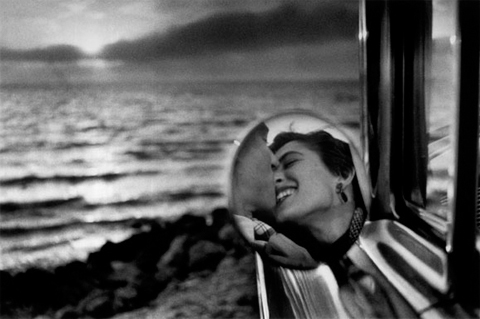
Photo: Eliot Erwitt


Talking to AD, I realize how "international" we (T & me) are. The last months we have met each time in 5 different countries: Germany, Croatia, USA, Mexico and Italy. And counting, since we will meet next week again in Belgrade. Awesome!

For couples having a Skype-relationship like us, airports have turned to be our "third place", despite Starbucks / You've got mail!.

* * *

1999, Mexico City. I am about to meet JE, but since I came in advance to our meeting point, I take out my PDA and start reading the Metaphysics of Aristotle because I've been working on some project. And then I realize what being a "classical author" is. Tell Aristotle that 2300 years later, somebody would be reading his notes... a. in a still unknown continent; b. translated to a still non-existent language; c. on an unimaginable electronic device; d. by a guy of a unknown race... Sounds as if in year 4300 somebody would be reading a book in an unknown galaxy, etc... Gosh!


Visitors